Khertvisi Castle, Khertvisi, Georgia

Monday, April 11, 2011

Babblings and Squiggles

One of the nicest things about Peace Corps (there are lots of nicest things) is that we volunteers really get a remarkable chance to learn a new language. Sometimes, some lucky volunteers get to learn multiple languages. Sam and I are two of those lucky few. Since being in Georgia, we’ve been working on Georgian, Armenian and Russian. One PC staff member informed us that PC Georgia is the only post that has volunteers learning three different languages that come from three different language families and use three different alphabets. Is this the post for Sam and me or what?

The Russian Alphabet


In Akhalkalaki, we mostly use Russian for our interactions. I teach at the Russian school, so instruction in classes is all in Russian (and consequently I have learned a lot of really ridiculous grammar terms in Russian). Sam’s school is one of the Armenian-language schools, so he has a lot more daily exposure to Armenian, but we both get an earful every day. Even though we could probably get by without studying any Armenian, it’s been a nice challenge and people in town seem to be genuinely happy and flattered that we are trying to learn. (We still try to study Georgian some, since it’s important when we travel to other parts of Georgia and for the above named reasons of us being fairly dorky and loving languages. Not many people in town know Georgian, though, so we don’t have a lot of chances on a day-to-day basis to speak or hear Georgian.)

The Georgian Alphabet


Since August, we have been studying Armenian. We’ve gotten pretty decent and can read and write and say a lot. The problem is, this Armenian we’ve been studying hasn’t been especially helpful in understanding folks in town. Akhalkalaki has its own unique dialect, which isn’t exactly like the literary Armenian we’ve been studying. In fact, it’s really incredibly different. Sam says that the difference between literary Armenian and the Akhalkalaki dialect is roughly on par with the difference between Modern Standard Arabic and the Egyptian dialect. The Akhalkalaki dialect incorporates a lot of words from Turkish, Russian, Georgian and Persian, and most people in town say that it is based on Western Armenian, as opposed to the Eastern Armenian that literary Armenian is based on. Everyday items are especially likely to differ in literary Armenian versus the dialect, so the things we are most likely to hear people talk about are the things we have the hardest time understanding.

The Armenian Alphabet


The Armenian dialect spoken in Yerevan is pretty similar to literary Armenian, although it, of course, has its own slang as well. I’ve been working to try to improve my listening comprehension by watching some of the Armenian soap operas that are shown each night. (This has, incidentally, helped me bond with our host grandmother. Now, whenever the theme music for our favorite show, “Anna,” comes on, she shouts to me to come gather round to watch.) It always helps pick me up a bit to know that, when it’s literary Armenian, I can hear it and understand. I have tended to get frustrated that even though we’ve been studying hard in our thrice-weekly lessons, I still can’t understand when people are sitting around talking in dialect. Moreover, it’s interesting for me to watch the show with our host family and see that there are times when they have trouble understanding—not huge problems, but words here and there that they don’t know. The other night, a main character was visited at home by two policemen who said, “You are under arrest.” These were the last words of the show, a dramatic ending for the weekend break. Only, no one watching with me understood what was said. They use the Russian word for arrested, so didn’t know the literary Armenian word. It took a bit of asking around to other host family members (ones who went to university in Armenia and know literary Armenian as well) to figure out what had happened.

Each day brings bits of progress though, whether it’s in the form of me understanding when a kid in my English class who never does any work says in dialect “why is she talking to me? I don’t know any English!” or in the form of being able to have a grocery store employee understand us as we ask for ice cream in literary Armenian. We get a lot of smiles and laughs and lots of people make fun of our mistakes and accents, but there has been progress. And at the very least, it’s nice to be able to give my students a hard time when they haven’t done their homework or don’t want to work in class by pointing out that I can say more in Armenian after 8 months of study than they can in English after 5 years. It’s the little things, really.

Sunday, April 10, 2011

Writing Olympics

Another project Sam and I were involved in lately was the Writing Olympics. It's a Peace Corps project that was started in Georgia by a PCV in 2004, which has grown to include students in 11 Peace Corps countries. The competition is open to students in 6th-12th grades and essays are judged on creativity and content, not spelling and grammar. The goal is to encourage students to take some risks and chances and learn to think creatively. I don't think it's an overstatement to say that creative thinking and originality are rarely taught here and generally aren't highly valued skills among students.

More often in classes here, the emphasis is on getting the right answer, memorizing the grammar rules and not ever making mistakes. But unless you hope to have a future as a textbook, you need to make some mistakes in the learning process and open yourself up to express original thoughts. Creativity, which seems to be taught to Americans from just about their earliest days, isn't part of the learning process here most of the time. It's like pulling teeth to get my students to write sentences or stories unless I give them explicit directions on the topic and how the story/sentence should be constructed and what verbs and nouns to use in it (and this isn't just a lost-in-translation thing; even asking students to make up sentences in Russian can be a real challenge). One fellow PCV told me about how she asked her students to draw pictures so then they could practice describing them using all the adjectives they had just learned. None of them would put marker to paper until she gave more specific instructions about what to draw. Little kids! With markers and paper, told to draw pictures, but couldn't unless told what to draw!

At any rate, the Writing Olympics is one effort to combat rote memorization and encourage some new thinking. Students have one hour to write an essay on one of three topics chosen for each class. We only tell them the topic on the day of the competition (so they can't prepare in advance), and they are not allowed to use any dictionaries, textbooks, online translators or outside assistance. Just them, with a paper and a pen, writing their thoughts on one of the topics provided.

Sam and I hosted a full day of Writing Olympics fun one Saturday at the end of March in Akhalkalaki. We had a few English teachers from town come to help us (we were allowed to translate the prompts into the kids' native languages, so these counterparts were key for helping us translate into Armenian). We had 54 total kids, from 6th-11th grades, participate from 3 of Akhalkalaki's 5 schools.

Here are the prompts students received:
6th Form
- How would your life be different if you were the opposite gender?
- Which would you rather be: a bird or a fish? Why?
- If you were an architect how would you design the perfect school?
7th Form
- How would the world be different if everyone spoke the same language?
- If you could choose to be an ocean, a river, a lake or a stream, which would you choose to be and why?
- What do you think your village/town will look like in 300 years?
8th Form
- If you could have any superpower, what would it be and how would you use it?
- What one sound do you wish you could eliminate from the world, and why?
- Describe your favorite photograph, and why it is your favorite.
9th Form
- What makes a country a country, other than language, geography, and government?
- What is a smell that reminds you of a specific memory, and what is that memory?
- If you could fill the night sky with something other than stars and planets, what would it be and why?
10th Form
- What is the funniest thing you have ever done or that has ever happened to you?
- If you could design a new flag for your country what would it look like?
- What does a caged bird think about all day?
11th Form
- What was God like as a child?
- Whom do you respect most and why?
- Describe the personalities of different rooms in a house (bedroom, bathroom, etc.).
12th Form
- If hunger were a painting what would it look like?
- Describe the perfect marriage.
- If you could start any business what would it be?

Last weekend we went to Tbilisi to judge the essays from all over Georgia. We received almost 1500 total essays, so the 20 or so volunteers that showed up to judge had a full day of reading. It was a lot of fun-intentional and unintentional bits of humor from essays were shared around (one kid's essay was an ode to Jon Bon Jovi, the greatest man ever to live). The majority of essays were fairly uninspired; most students wrote sentences that they likely memorized from their textbooks at one time or another. They found it difficult to imagine "what if" and often wrote that they couldn't be a bird, because that wasn't possible or that a country is only a country because of language and government or something similar. The standout essays were truly standouts. Some kids were incredibly talented and wrote such fantastic tales that, indeed, spelling mistakes and grammar errors were completely unnoticeable. The kids who won (we chose 1st, 2nd and 3rd places in each grade, first from each region of Georgia, then from those winners, we chose national winners) will get some pretty nice prizes, but hopefully each child that participated will have learned at least a little bit about thinking differently.

Saturday, April 9, 2011

Akhalkalaki Girls’ and Women’s Fitness Club

One of the projects I have been working on here in Georgia is a fitness club for girls and women in my town. There aren’t really a lot of opportunities for females to play sports or run around and the fairly conservative culture frowns upon such actions, especially if undertaken solo. Interestingly, most folks here say the culture has gotten much more conservative since the end of the Soviet Union, a reactionary “return to our roots” that has seen women lose opportunities and rights. Soviet women were expected to play sports and study science and become engineers and doctors. Nowadays, though, it’s like being back in 1950s America (or so it seems to me).

Today's group


Even just being outside after dark alone is a big no-no for the XXs, and a woman walking alone through town will be talked about. So even though lots of ladies have been dying for something to do, it’s easier to go with the flow in this small town than to go against the grain. Women tend to spend their time doing housework (no small task), watching after children, working (due to high unemployment in the city, many women are the main breadwinners in the family), visiting with neighbors and generally staying close to home. Young women and girls get indoctrinated into these roles pretty early as well, although you will see groups of young women walking together in the park into the evening, and girls will play a modified version of “volleyball” or ride bikes when the weather is nice.

There aren’t many organized activities here for girls, though. There are some sports teams and clubs and classes for boys and young men, on the other hand. Akhalkalaki has a fairly nice gym that was built by the federal government not long ago. Although this gym is focused on boxing, it has two basketball hoops and plenty of space for other activities.

The Akhalkalaki Sports Complex


My friend, Marianna, and I, after talking about this imbalance, started planning for and working on pulling this club together. In October we talked with the manager of the gym, and learned that, since it’s a federal construction, we could use the space for free. We secured a time slot—Tuesdays and Thursdays from 6:00pm-8:00pm and Saturdays from 2:00pm-4:00pm. Then all we had to do was get a group of girls together to exercise.

Some running (but that's not all we do!)


It sounded like that would be the easy part. But breaking cultural norms and asking girls and women to leave their houses in the evening, to try something new, and to put themselves in a position where others could gossip about them were difficult things to overcome. Marianna was able to help me navigate these cultural differences, though, and strong-armed a small group of her friends, relatives and students to come. She came up with the brilliant plan that we should meet 30 minutes early and then go door to door to pick up each girl and walk together to the club. That way, no one had to walk alone at night.

Jump!


We started off slowly, first meeting in early November. A solid group of about 5-7 women came from the beginning. Then, in January, Marianna suggested some strategies to build a bigger group. We bought an ad on the local TV channel for a week, advertising our club. More and more people started to hear about the group and get interested. The local news came and interviewed Marianna and me and played a 10-minute segment about the group. In short, we’ve started to grow.

Doing some toe touches


We now regularly have between 10 and 25 girls and women who come to the club, between the ages of 12 and 55. Everyone seems to really enjoy it and it’s gotten easier to get people to meet at the gym itself (they tend to meet up in clusters that live near one another and walk together). This has been a real community-driven project, and one that so far has required no money (other than the $10 I kicked in to buy the TV ad). I have big hopes that pretty soon the fitness group will start to really be seen by everyone as sustainable and will be continued after I leave in another year and a half.

So what do we do in the fitness club? I usually plan a circuit-based exercise routine that tries to hit all muscle groups while focusing on cardiovascular work, strength training, balance and flexibility. I take bits and pieces of all that I’ve learned from years of competitive sports, running, yoga, gym memberships and watching Biggest Loser like a freak. We have limited resources (a gym and a few mats), so we rely on lots of body weight exercises. Here’s what we did today:

Working to get the form right first


1-Run two laps around the gym, walk two laps
2-Stretches
3-Jump 4 ways: 10 jumping jacks, 10 lateral line jumps, 10 twist jumps (like doing the twist, only jumping), 10 high-knee jumps (jump and bring your knees up as high as you can), followed by 1 walking lap, 2 running laps, 1 walking lap (3 sets of this)
4-Modified pushups-hold in plank (pushup) position for 5 seconds, then lower as close as you can to the floor, then drop to the floor and push yourself up from there. Repeat 5 times. (2 sets)
5-Lying toe touches-lie on your back with your legs straight up, then reach up and touch your left foot with your right hand and return to start, then reach up and touch your right foot with your left hand and return to start (10 touches, 2 sets)
6-4 types of running-giant strides (full court down and back), butt kicks (full court down and back), high knee running (to half court), lunge steps (back from half court) (2 sets)
7-Superman swim-lie on your stomach and lift your arms and legs, keeping them straight, then move them up and down like your swimming (10 seconds) (2 sets)
8-Side planks (10 seconds on each side) (2 sets)
9-Bicep tables-with your hands under your shoulders (hands pointing towards feet) and feet under knees, push yourself up so your belly is flat. Hold for 10 seconds. Then do 5 tricep dips. Push back up to table position and hold another 5 seconds (2 sets)
10-Indian run-run in a line, slowly. The last person in the line has to sprint to the front of the line. As soon as she is in the front, the new last person sprints ahead. (2 laps)
11-Cardio relay-sprint from one sideline to the other, walk back to start, then skip from one sideline to the other, walk back to start, then hop on right leg from sideline to sideline, walk back to start, then skip on the other leg and walk back to start. Follow with walk one lap, run one lap. (2 sets)
12-Run two laps, walk two laps
13-Stretch

We always start and finish with running 2 laps, walking 2 laps and stretching. By keeping the exercises short and doing 2-3 sets of them before moving on to something new, it stays interesting and, while challenging, isn’t too much for anyone. You might see that there is a lot of running when all added up (I figure it’s about 2/3 of a mile of running and about the same of walking each session), but since it’s broken up it never seems like too much for anyone. And I always try to give modified versions of exercises that increase or decrease the difficulty (so people can walk instead of running, or do only every other repetition of an exercise or hold their legs differently to make something easier or harder). My only rules are that we should have fun, stop and tell me if something hurts and not to sit down during the club.

After we finish (we usually work out for about an hour or 70 minutes), most of the girls want to play “basketball” for a few additional minutes, and some of the older participants ask me to show them additional stretches or exercises. I use a lot of yoga poses for these smaller groups, since it’s easier to keep an eye on their form and make sure no one is doing something that will throw out their back or cause any damage.

All in all, the fitness club has become one of the highlights of my week and the most fun thing I do!

Friday, April 8, 2011

Daily Run

I'm on a roll here with blog posts, so I figured I'd write about one of my favorite parts of every day. I've written about running in Akhalkalaki before, but this time, I've got pictures.

It was a beautiful day as we set out this morning, if a little early and a little chilly still. We usually run along the new highway that leads to the Turkish border, as it's the easiest route and has relatively few dogs to worry about running into. Most days, we run (Sam usually passes on the Tuesday morning run, since he has to leave for school at 8:40am, and we sometimes skip a day with particularly bad weather). We run 3 miles, which we can measure thanks to the Garmin running watch my siblings got me for my birthday 2 years ago. Here's a look at our run.

The view as we walk from our house up to the road


This is where we start (only a slight uphill...)


Pretty soon we're out of Akhalkalaki...


...and we have our choice of running towards Ninotsminda (and the Armenian border) or towards the Turkish border


We get a lot of views of potato fields along the way


Doesn't Sam look thrilled?


When we get to this village, it's time to turn around


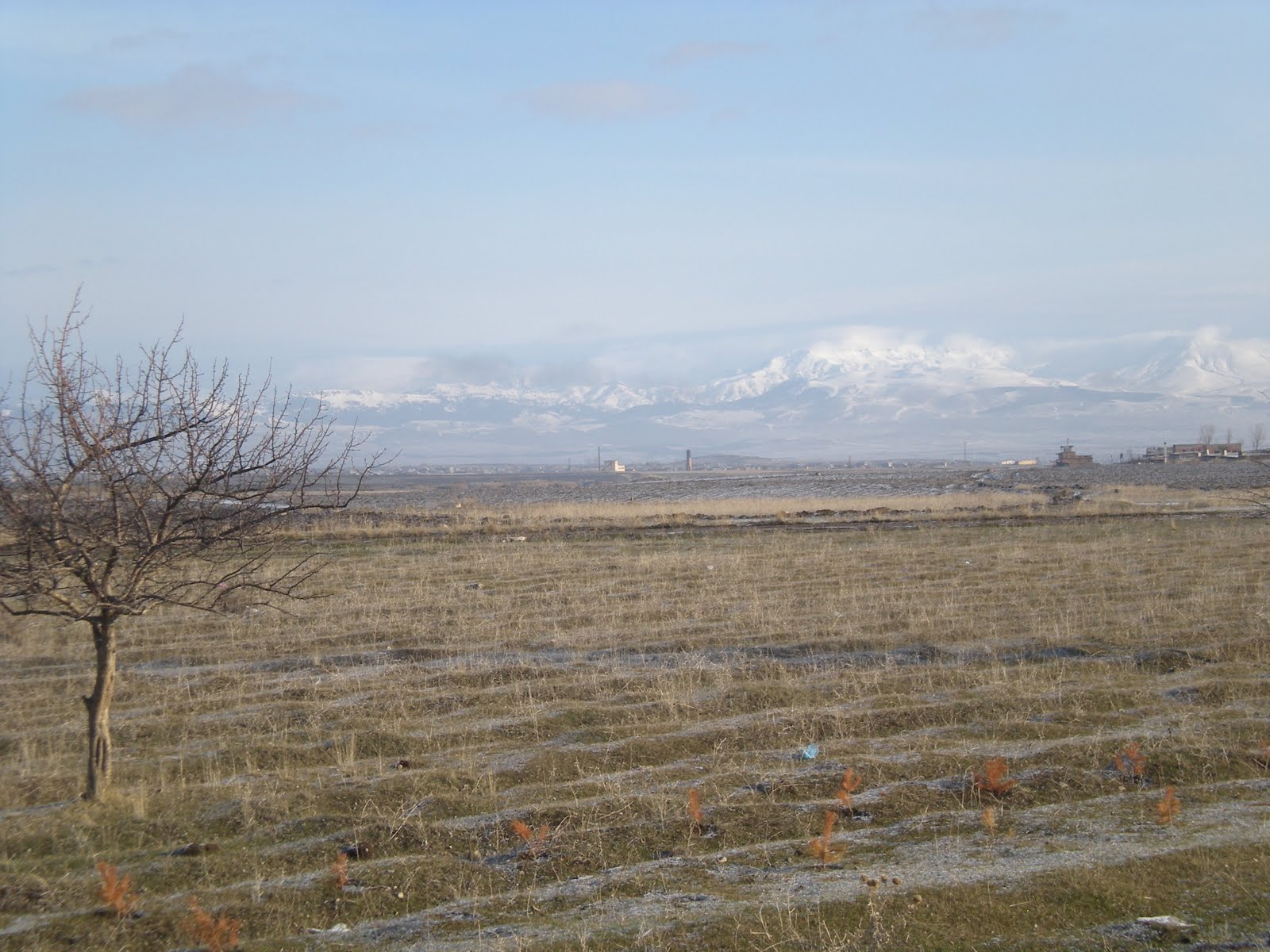
Our view on the way back usually includes a spectacular shot of Mt. Abul, the tallest mountain in our region, but today it was all covered up by clouds


We come back into Akhalkalaki and then there's only half a mile to go


Three miles! All done!


Sam is a real trooper to put up with my daily running habit

At an Armenian Wedding


Although we have heard and seen the telltale signs of numerous weddings about Akhalkalaki, we were just invited to our first wedding on Wednesday this week. (These "telltale signs" include long processions of cars, often led by the stretch Hummer that is for rent, honking their horns incessantly for the better part of the day; hearing traditional Armenian music being performed on a clarinet-like instrument and drums outside the houses of the bride and groom; lots of cars/worse driving than usual near the church; lots of fireworks being shot off around 11pm.) Weddings in Georgia (and specifically Armenian-Georgian weddings in Akhalkalaki) are a big deal. There are some traditions that coincide with American traditions, while others are fairly different.

The bride and groom take the first dance


We met with one of my teaching counterparts and her husband (who are neighbors of the groom) at just about 5:00pm on Wednesday (weddings are held any day of the week here, and not reserved for weekends only) to walk to the reception hall. The wedding ceremony itself lasts the whole day, and since we had to work, we weren't able to participate in everything (and most guests actually only go to the reception). But we did have a chance to watch a video of our host parents' wedding, so I can retell most of it here. (Consequently, watching the tape reminded me of how Mom inexplicably used to have about 23 copies of the video of my Aunt Mary and Uncle Matt's wedding. Do you still have those?) When we get our next wedding invite (as I'm assured we sometime soon will), I'll be sure to better document all the ceremonies.

First, about a month or so before the wedding itself takes place, there's a wedding-reception-like party to celebrate the official engagement of the couple. It also kicks off the start of the wedding preparations, and is the real countdown to the marriage. Sometimes this is instead a mini-banquet or toasting session at the bride-to-be's house with close friends and relatives, other times it's a big blow-out.

The wedding cake


On the wedding day, the closest family and friends of the couple help get everything ready. They go to the groom's house and to the bride's house (I forget in which order), bringing gifts and followed by the above-mentioned musicians, playing traditional music. Toasts are said and snacks are consumed. As gifts are brought to be exchanged, the presenters of the gifts dance them around to the music, while everyone else dances around in the street outside the house (and there's lots of arm action in Armenian dancing). The groom then goes with his posse to the bride's house, where more gifts have to be given in order for her family to let him "take her." Sometimes money is paid to relatives as a symbolic gesture in exchange for them letting the bride go.

Next, everyone in this circle (again, close relatives and friends--usually about 30 people, I'm told) go to the church for the wedding ceremony. Everyone piles into cars that are decorated with balloons and sometimes with a giant pair of wedding rings (I'll get a picture of this sometime soon and post it) or led by the for-hire stretch Hummer that resides here. Another stop is sometimes made at the civil registry office (sometimes I think this is done on a different day, but I'm not sure) to make the marriage official in the eyes of the law. The ceremony done, they go back to the groom's house (usually his parents' house; almost always, couples live with the parents of the groom). More music and dancing and toasting is done. Also (I think it is at this point), the couple enter the house together and each step on a plate to break it. If the bride breaks her plate first, it is supposed to mean that there will be equality in the house and that she won't have to be subservient to her husband. If the groom is first, it means the traditional order will reign. Then the mother of the groom puts lavash (Armenian flat bread, almost like tortillas) on the shoulders of the bride and groom to ward off evil spirits and ensure prosperity and feeds them honey so that their lives together will be sweet.

The tables are already laden when guests arrive at the reception


Then, the whole wedding party meets with the rest of the guests (that's where we came in!) at the reception hall. Although the bulk of the wedding day is spent with a small group of 20-30 of the closest relatives and friends, the reception often includes 200-400 people--friends, relatives, neighbors, teachers, random Americans living in town--everyone is invited. The wedding we attended seemed to have about 250 guests or so. At the reception, tables are already spread with tons of appetizer-type foods (cheese, vegetables, fruit, bread, cakes, various cured meats... the usual) and each table has drinks already placed on it (no going up to a bar for your drinks! They come to you!). There is a head table where the bride, groom and their sponsors sit (they call them godparents, but they're like the sponsors or witnesses or best man and maid of honor). They introduced the parents of the bride and groom, the sponsors and then the bride and groom as they made their entrance. The bride and groom have the first dance, then there was a dance for their families. Then came the song for the entrance of the kebobs.

The drinks selection that was replenished at each table throughout the night


The first hot dish brought out was horovats, or grilled meat skewers, which has special music for its presentation. The waitresses brought this and a parade of other hot dishes throughout the evening (including fried meat cutlets with fried potatoes, steamed trout and a type of khachapuri called atchma, which is like cheese lasagna, minus the sauce). There was a lot of music and dancing throughout the reception (the musicians who played all day at various houses and locations come along and play traditional music, but are backed with a synthesizer and accompanied by a singer). There is a master of ceremonies-type person (they call him the tamada, the toastmaster, but he also just keeps things rolling along and makes announcements, etc.). Of course, there is a wedding cake and this is cut and eaten according to similar traditions as in America. The bride and groom both throw things (not quite a bouquet and garter, but same idea) to the unmarried men or women in attendance.

People give gifts during the wedding, but gifts take a whole different form. Most of the gifts (or what we saw, anyway; other gifts are exchanged at times outside of the reception) are in the form of gold jewelry, and they were presented during a special dance with the bride and groom, wherein all the guests with gifts came up and danced around with the jewelry boxes before then opening them dramatically and then putting the jewelry on the bride. She ended up pretty laden with bling by the end of the dance.

The reception started right around 5:00pm and we lasted there until about 10:30pm, but the party was definitely not on its last legs at that point. It was a lot of fun and a lot of eating. I'm sure I've missed some of the traditions in my retelling and I wish I had more pictures (especially of the pre-reception festivities), but as we go to future weddings in Akhalkalaki, I'll update my information.

And since we're on the topic of weddings, it's only 9 more days until Sam and I will be back in America for my sister's wedding and only 15 more days until that wedding takes place! I hope that gives us enough time to find the appropriate band of wandering minstrels to add to the festivities...

Wednesday, March 30, 2011

Signs of spring

Sam and I bought ice cream today in Akhalkalaki! If there's a surer sign of spring, I don't want to know what it is. More than robins, ice cream is a marker here of the approach of warmer weather, since most folks swear that eating ice cream when it's cold will bring certain death by cold, flu or other ailments. It was heartbreaking when, in late fall, all the ice cream freezers in town started to disappear from sidewalks, and stores cleared out their ice cream stocks to make way for frozen chickens.

I noticed the appearance of the first street-side ice cream freezer yesterday and sent Sam the following text: "Ice cream! :) It's spring!!!" Five minutes later, though, I had to send this follow-up text: "Well, strike the spring part. Now it's snowing. At least there's still ice cream!"

But the snow and ice are melting and the ice cream vendors can't be wrong. Before long, we'll be out of our sweaters and long underwear and on to less bulky clothing choices!

Wednesday, March 23, 2011

A lot of happenings, travelings and celebratings

(Looks sheepishly at the date of the last blog update.) I guess I’ll make this a long post, because 1) we’ve had a lot go on and done a lot since last post and 2) if it’s a long post, maybe you won’t see the date of our last post and be reminded of our slacking.

It has even been a long time since I’d uploaded my pictures from my camera to computer. Good thing I had photographic evidence, though, to remind me of all the things we’ve been up to.

First, on March 8, we celebrated International Women’s Day. We had the day off from school (my school was rounding out the end of its long holiday, combining this day with the March 3 Mother’s Day celebrations) and were able to relax and spend time with our host family. All of the females of the house got presents, including an adorable new outfit for Lilit. At one point during the evening, our host family decided that it would be best to dress our host father’s nephew, Narek, in Lilit’s dress. He’s only about a year older than Lilit and so was easily convinced that this was a great idea, totally unsuspecting our host family’s sinister plan to hold on to the subsequent photos of him decked out in his cousin’s dress and accessories until he starts to date, then springing the pictures on his girlfriend. All Narek had to say about the ordeal was “What a pretty girl!” when he saw himself in the mirror. Ah, the things we can dupe children into doing!

Narek strikes a pose


He does look quite dashing in Lilit's togs!


After finishing up a grueling 3-day week at school, we headed off to Kortaneti to see our host family from training. Last time we visited, Maia and Zurab made us swear to come back so they could celebrate my birthday with us. We got to the village at about 11:30am, expecting to sit around the pechi (the wood-burning stove that serves both to heat the house and as an oven to bake bread and khachapuri) and talk for a while. As we approached the house, though, we could smell the overwhelmingly delicious aromas of Maia’s cooking. She had been baking all day, producing several stacks of khachapuri, lobiani (same idea as khachapuri, only with beans and spices inside), fresh bread, soup, pigs in a blanket and a super fancy chocolate mousse cake. (A side note on pigs in a blanket; one time during training, Maia made these—hotdogs, wrapped in dough, then fried—for lunch for us and we told her that in English, we often call similar things pigs in a blanket. She loved this name and now tells everyone in the village that this is the name for this very tasty, very un-dietetic dish.)

The table was all set...


This was the leftover khachapuri and lobiani


We were immediately ushered to the table, where we began slowly to consume large quantities of all these delicious foods. And wine. Oh, the homemade wine of Kortaneti. Zurab and Maia grow the grapes, harvest the grapes, smash the grapes, make the wine, store the wine and then, boy, do they drink the wine. Wine culture in Georgia is fascinating, and something we don’t think too much about in Akhalkalaki, because the high elevation and harsh climate aren’t kind to grapes. Very few people here make their own wine, and so very few people drink wine like they do in other parts of Georgia. We went through the traditional series of toasts (to God, to friendship, to children, to parents, etc.), then we had a series of toasts for me, celebrating my birthday, special toasts to my parents in honor of my birthday, special toasts for all birthdays… Other folks from Kortaneti floated in and out to drink a few toasts, sample some of Maia’s lobiani, and give kisses all around. When we finally got up from the table, some 6-and-a-half hours later, we were all so full of food and wine and good cheer that there was a general consensus that the sensible thing to do was to pull up chairs and fold out the couches near the pechi and sleep for two hours. What a happy birthday!

A toast!


The cake, with me and Sam


Priorities: Zura pours wine, I cut the cake


On Sunday, we spent some more time in Kortaneti, watching the snow start up again and remarking at how many trees there are.

Snow in Kortaneti... just for me!


Then we headed off to Tbilisi to meet up with a few other volunteers to continue the birthday celebrations and in order for me to go to a meeting for a PC committee that I’m part of on the next day. The weather in Tbilisi was the first spring-like weather we’d seen, so I rung in 29 by making Sam go for a run with me in the warm sunshine (we didn’t have to wear hats! or gloves! or 13 layers of clothes!). After a refreshing run in the sun, we went with the other volunteers to get cake and coffee at a place called “Chocolate” (can’t go wrong with a name like that!) and then went to dinner at a Georgian/Ossetian restaurant in the old town that’s quickly becoming my favorite place to eat in Tbilisi. They make delicious Georgian food, but it’s spicier than normal (that’s the Ossetian touch, apparently), and to top it all off, the restaurant is also a brewery and makes a pretty good beer. So we ate some khinkali (meat dumplings) and more khachapuri (the Ossetian kind also has mashed potatoes mixed in with the cheese) and then waddled back up the road in the warm evening air.

On Monday, after my meeting at the PC office, we piled into a marshrutka (minibus) with the other Education volunteers and headed to the west coast of Georgia, to the Black Sea resort town of Kobuleti. We had a training all last week with our counterparts to talk about designing projects. Our usual training site is in Bazaleti, about an hour north of Tbilisi. By some stroke of unbelievable luck, it ended up being cheaper to hold this training, however, at a 5-star resort hotel on the seashore instead of in the conference facility we’ve become accustomed to. This is Peace Corps?! I can deal with this. The weather in Kobuleti was incredible, and even though we were inside all day for our training, the leftover minutes around lunchtime and the few remaining hours of sunshine at the end of the day were enough for us to really enjoy it.

Our super swanky hotel


The view from our hotel room balcony--do you see the sea?


The Black Sea at sunset


Me and my counterpart, Marina


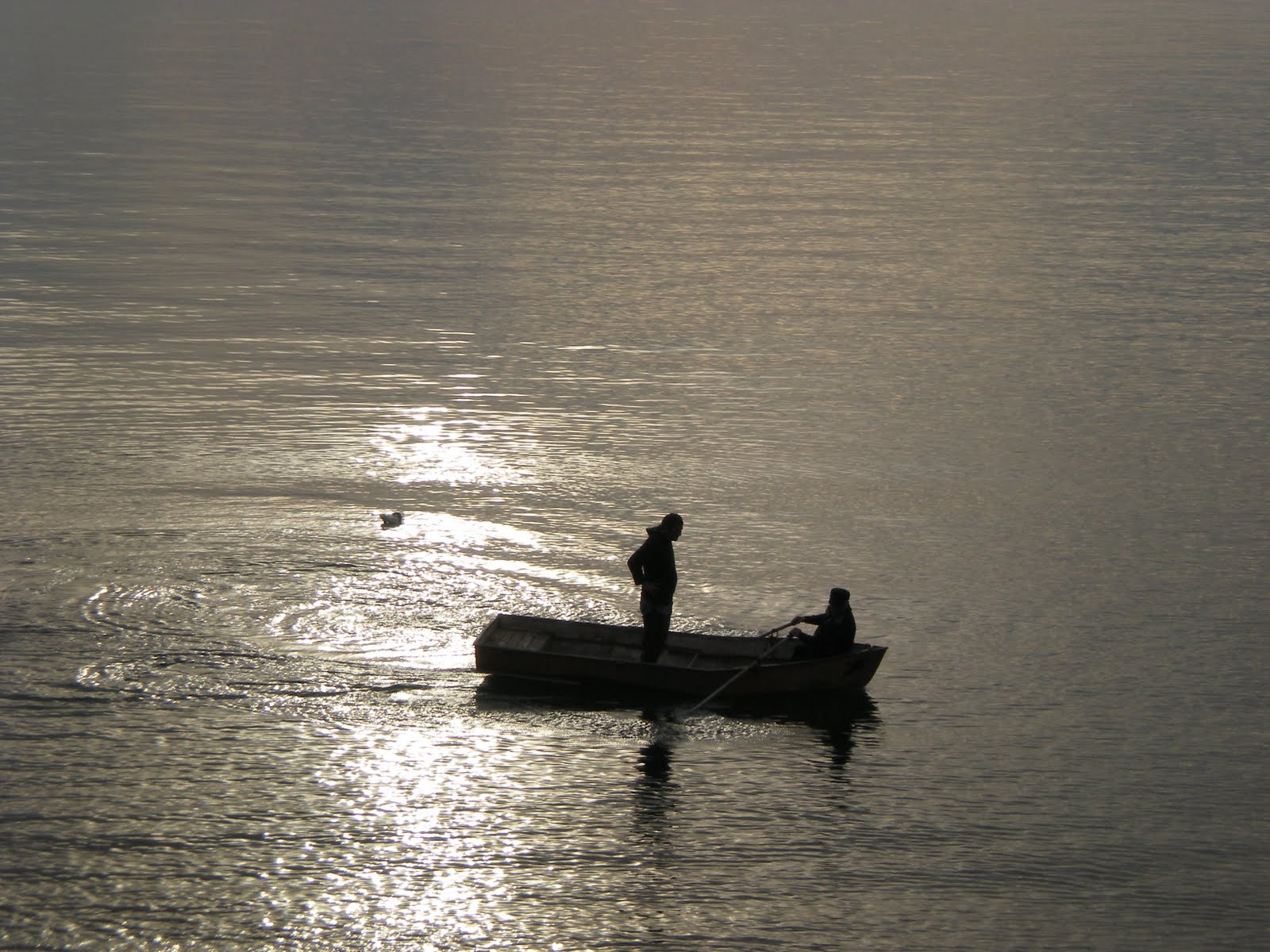
Fishermen on the Black Sea


Once the training was over, Sam and I decided to take advantage of our position in the west of the country to do some exploring and site seeing. We traveled to Kutaisi, Georgia’s second city, about an hour away from Kobuleti. The big draw for us (read: Sam) was the chance to go to Sataplia park just outside of the city; it’s a big natural reserve with cool caves oozing stalactites and stalagmites, and also happens to have some fossilized dinosaur footprints. We went out to the park to see all these wonders, but unfortunately the park was still closed for winter (it opens April 1! We were so close!). We still had a great time, however, wandering around the city, heading out to a cool old monastery clinging to a cliffside and hiking through some very green (already!) forests (with dog companions picked up along the trail) on the outskirts of town. We checked out the Kutaisi museum, which was fantastic, even if it did make Sam start up again with his “awww, I should become a bronze age archeologist!” We stayed in a homestay recommended by our Lonely Planet guidebook. The owner of the house, a lovely older woman named Mariko, was so tickled that we knew some Georgian that she rattled on at us for hours, plying us with her homemade pickles, cheese and wine and then sadly sending us off with bottles of tkemali sauce (a sauce used all the time by Georgians on meat or potatoes, made from sour plums). We will definitely go back again sometime soon!

There were FLOWERS! GROWING! In Kutaisi!


One of our hiking dogs, near my new favorite graffiti: Magda, you are my lafe!


Sam and our hiking dog companion, overlooking someplace outside of Kutaisi


Me and Sam, with Gelati monastery in the background


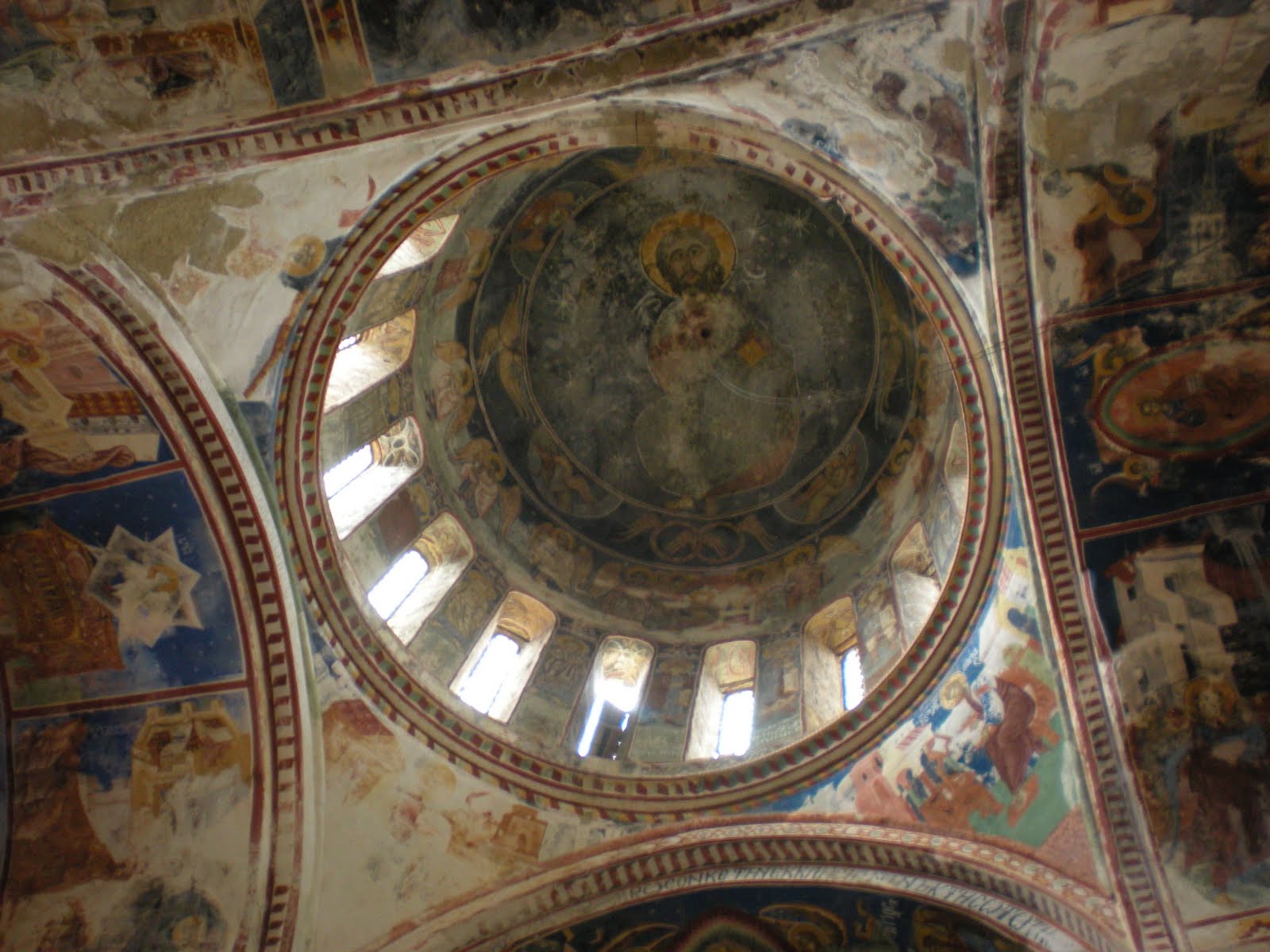
Inside Gelati monastery church


More from Gelati


Sam, looking suspiciously at a Kutaisi statue


A park in Kutaisi


Another church/monastery in Kutaisi


On Sunday, we returned to Akhalkalki, tired but happy after a long time away and a lot of marshrutka travel. Our luck with the weather held out and we came back to find almost all of the snow melted away, lots of sunshine and warmer temps than we’ve had in a long time. All good things must come to an end, though, I suppose. Here’s a shot of the street outside our house this morning. Sigh.

Good while it lasted...